
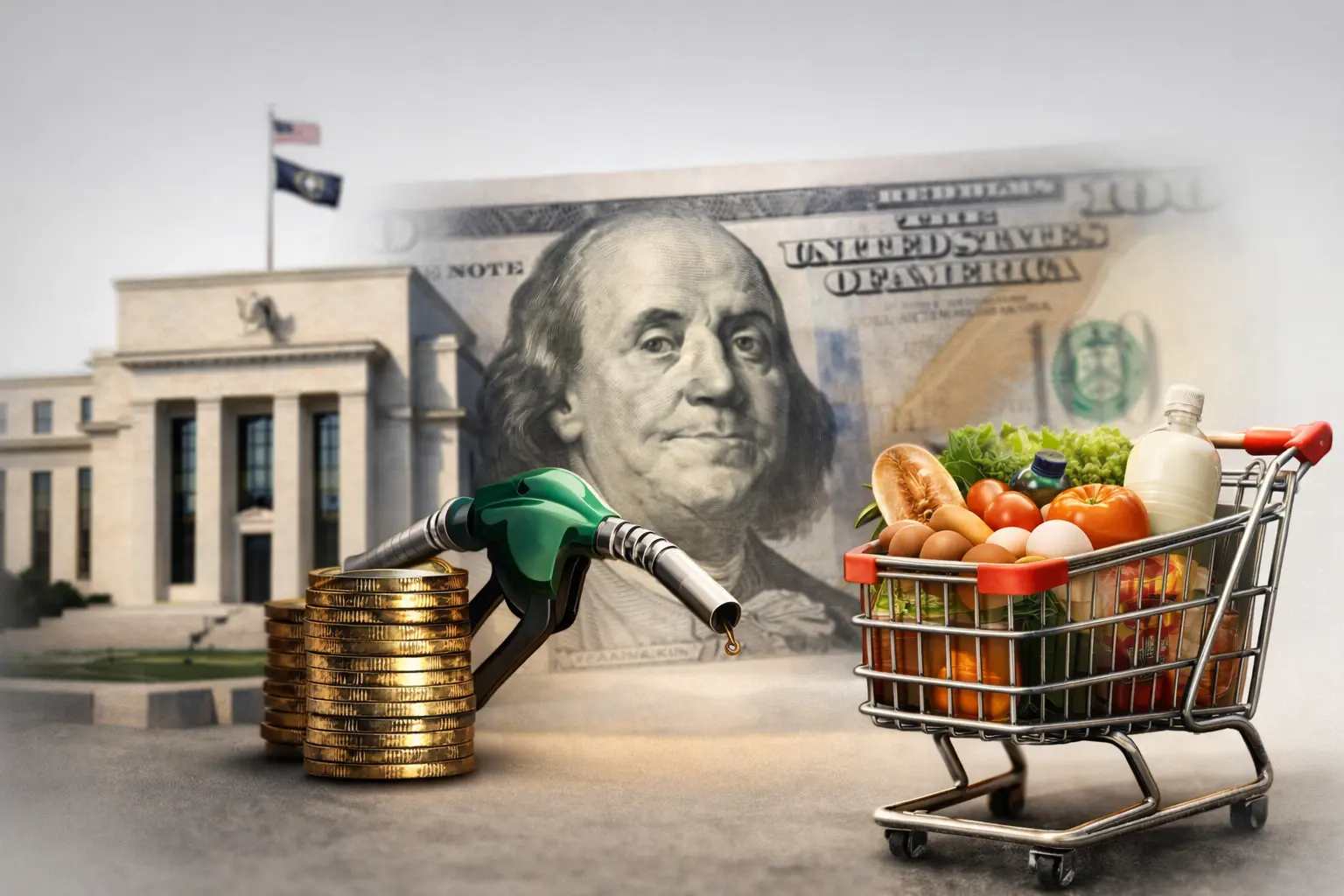
Is America headed for a smooth economic landing or a long stretch of financial uncertainty? The latest data from early 2026 suggests that stability has arrived, but relief is arriving much more slowly than many households expected.
This week’s decisions from the Federal Reserve and new labor and inflation numbers reveal an economy that is resilient, yet frustratingly expensive.
Let’s break down what happened, why it matters, and how it could affect your wallet in the months ahead.
A Real-Life Look: Still Waiting for Lower Rates
Consider Emily, a 35-year-old marketing consultant in suburban Ohio.
Back in 2024, she and her partner postponed buying a home, hoping mortgage rates would soon fall below 5%. Two years later, they’re still renting. Rates remain high, home prices are sticky, and monthly payments would consume nearly half their income.
Emily’s paycheck has grown. Her job feels secure. But between rising insurance bills, grocery prices, and rent, she doesn’t feel financially ahead.
Her situation reflects a growing reality for millions of Americans: working, saving, and surviving but not thriving.
This Week’s Economic Highlights
Early February 2026 set an important tone for the rest of the year. Here are the key developments.
1. Federal Reserve Keeps Policy Tight
The Fed announced it would maintain its benchmark rate in the 3.50%–3.75% range. Officials emphasized that inflation has eased, but progress toward the 2% target remains slow especially in services like healthcare and housing.
2. Jobs Market Remains Resilient
According to the Bureau of Labor Statistics, non-farm payrolls increased by about 145,000 in January, while unemployment edged up to 4.4%.
This suggests steady hiring without overheating often called a “Goldilocks” scenario.
3. Inflation Still Above Target
Personal Consumption Expenditures (PCE) inflation is hovering near 2.6%, according to data from the Bureau of Economic Analysis.
Rising medical premiums, housing costs, and insurance rates remain major contributors.
4. Global Currency Movements
The euro strengthened after Europe showed signs of economic stabilization, while Japan’s yen recovered modestly. As a result, the US dollar softened slightly on global markets.
5. Energy Prices Ease
Crude oil slipped toward $74 per barrel as US output reached record levels. National gasoline prices remain near $3.10 per gallon, providing modest relief for commuters.
Understanding the Dollar and the Economy
Why the Dollar Is Losing Some Momentum
For years, the dollar benefited from America’s higher interest rates. Global investors parked their money in US assets for better returns.
Now, as other central banks stabilize, some capital is flowing back overseas. This reduces demand for the dollar.
A softer dollar has mixed effects:
- Helps exporters sell abroad
- Makes foreign travel and imports more expensive
Bond Yields and Mortgage Rates
The 10-year Treasury yield recently moved back above 4%.
Since mortgage rates track long-term bonds, this means home loans are likely to stay in the 6%–6.5% range through spring.
For buyers, this limits affordability and keeps many on the sidelines.
Housing Market Reality
- Inventory is improving
- Competition is lower than in 2022
- Prices are mostly flat
Most markets are experiencing stabilization rather than boom or bust.
Consumer Spending Patterns
Spending is still strong but changing.
Declining:
- Luxury renovations
- Recreational vehicles
- High-end electronics
Rising:
- Dining out
- Subscriptions
- Essentials
Meanwhile, credit card delinquency rates have risen to around 3.1%, signaling stress among lower- and middle-income households.
Editorial View: A “Boring” Economy Is Healthy
Let’s cut through the noise.
Is the US Economy Strong?
Yes. Current GDP growth near 2% reflects sustainable expansion. A major recession in 2026 appears unlikely.
Is Inflation Defeated?
Not fully. America is settling into a 2.5% inflation environment. Prices are unlikely to return to pre-pandemic levels.
Households must plan for permanently higher baseline costs.
Stock Market Risk
The S&P 500 continues to trade at elevated valuations, driven largely by artificial intelligence optimism.
Some companies justify their prices. Many do not.
Investors should prioritize:
- Profitable businesses
- Strong balance sheets
- Sustainable cash flow
Speculation is becoming riskier.
Is It a Good Time to Buy a Home?
If you plan to stay long-term (7+ years), buying now can make sense.
Competition is muted. When rates eventually fall, bidding wars may return.
The strategy remains: buy the right home, refinance later.
Outlook: Next 3–6 Months
Here are realistic expectations through mid-2026.
Interest Rates
One modest rate cut (0.25%) is likely by summer, assuming inflation keeps easing.
US Dollar
Expected to remain stable or drift slightly lower.
Stock Market
Expect turbulence. A 5%–8% correction in technology stocks is possible as earnings forecasts adjust.
Housing
Spring sales should improve modestly. Price growth likely stays between 0% and 2%.
Employment
Wage growth will normalize near 3%–4%. The post-pandemic hiring frenzy is over.
What This Means for American Households
Your Income
Large raises are becoming rare. Job stability and skills development matter more than ever.
Tip: Invest in certifications and high-demand skills.
Your Savings
High-yield savings accounts still pay around 3.5%.
Keeping emergency funds in low-interest checking accounts means losing purchasing power.
Your Debt
Credit card APRs remain near 24% or higher.
Paying off high-interest debt offers better returns than most investments.
Your Grocery Bill
Supply chains are stable. Most staples should remain flat in pricing, though beef and dairy may stay elevated.
Your Retirement
Bond yields near 4.5% are making conservative portfolios more attractive again, especially for near-retirees.
Conclusion: Stability Is the New Normal
February 2026 is not defined by crisis or boom. It’s defined by discipline.
America has avoided recession. Employment is solid. Growth continues.
But money is no longer cheap. Consumers must be more intentional. Investors must be more selective. Borrowers must be more cautious.
The era of effortless gains is over. The era of smart planning has begun.
Action Step: Review your savings account this week. If you’re earning under 3.5% APY, consider moving your funds to protect your purchasing power.
We’ll return next week with a detailed breakdown of the upcoming inflation report.
Sources & References
This article is informed by publicly available data from:
- Federal Reserve Monetary Policy Statements
- Bureau of Labor Statistics Employment Reports
- Bureau of Economic Analysis Inflation Data
- US Energy Information Administration
- Major financial publications and market data providers
Financial Disclaimer
This article is for informational and educational purposes only and does not constitute financial, investment, or legal advice. The views expressed are opinions based on publicly available information at the time of writing.
Market conditions can change rapidly. Readers should consult a licensed financial advisor or professional before making investment, credit, or major financial decisions. The publisher and author are not responsible for any losses arising from the use of this information.