
Date: February 9, 2026
Topic: U.S. Dollar (DXY) & Market Analysis
King Dollar Steps Back
After flexing its muscles last week, the U.S. dollar is starting Monday on softer footing.
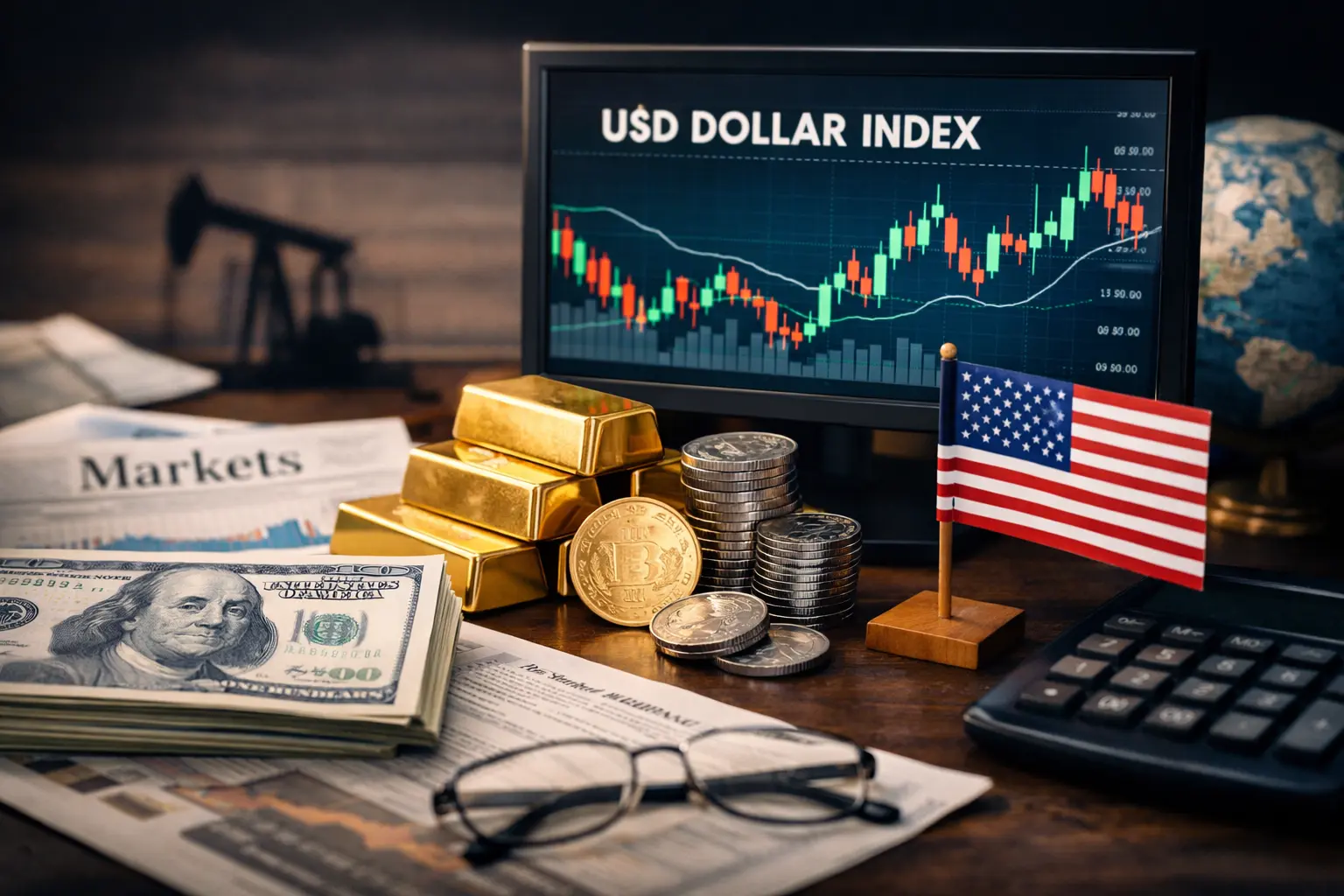
The U.S. Dollar Index (DXY) which tracks the greenback against major currencies like the euro and yen is down about 0.2% to 0.3%, hovering near 97.30.
The reason is simple: investors are feeling less anxious.
Last week, markets were on edge, and money rushed into the dollar for safety. Today, that fear trade is unwinding. Traders are rotating out of defensive positions and back into stocks, emerging markets, and higher-yielding currencies.
As risk appetite returns, the dollar is losing some of its shine.
One immediate result is a sharp rally in commodities. Gold and silver are climbing, with silver up more than 4% in some markets. A weaker dollar makes dollar-priced assets cheaper for overseas buyers, pushing demand higher.
Why This Move Matters
When the dollar weakens because investors are buying risk not because of bad U.S. data it usually signals confidence in the economic outlook.
Right now, Wall Street is betting on a “soft landing”: slower growth, easing inflation, and no recession.
Today’s pullback suggests traders are less worried about a sudden downturn than they were late last week.
But this optimism comes with an asterisk.
All eyes are now on the Federal Reserve. Several senior officials, including Governor Christopher Waller and Governor Stephen Miran, are scheduled to speak today. Markets will be listening closely for any hint that policymakers are pushing back against expectations for rate cuts later this year.
A single hawkish comment could quickly reverse today’s dollar losses.
How This Affects Your Wallet
Currency moves may seem abstract, but they quietly influence everyday costs.
Here’s what today’s shift means for you:
📉 Inflation and Gas Prices
A softer dollar can make imports more expensive over time from electronics to food and wine.
In the near term, the biggest impact is on oil. Since crude is priced in dollars, a weaker dollar often lifts oil prices.
If this trend continues, you may see slightly higher fuel prices in the coming weeks.
🏠 Mortgages and Loans
As money flows into stocks, demand for safe government bonds often declines. When that happens, bond yields can rise.
That puts gentle upward pressure on loan rates.
For now, mortgage and personal loan rates remain mostly stable. Banks are waiting for upcoming inflation data before adjusting pricing in a meaningful way.
💰 Savings and Investments
High-Yield Savings Accounts
No immediate changes here. With the Fed still holding rates steady, most top savings accounts remain above 4% APY.
Retirement Accounts and Stocks
A weaker dollar benefits U.S. companies that earn revenue overseas. Firms like Apple and Coca-Cola see foreign profits rise when converted back into dollars.
If your portfolio includes large multinationals, today’s move is supportive.
✈️ Travel and Spending Abroad
Planning a trip to Europe or Japan this spring?
The dollar’s dip means your money buys slightly less abroad than it did last week. The change is small for now, but worth watching if the trend continues.
What Markets Are Watching Next
Two events will likely determine the dollar’s direction over the next few weeks:
1. Federal Reserve Commentary
If Fed officials sound tough on inflation, the dollar could rebound quickly.
If they acknowledge slowing growth and easing price pressures, the currency may weaken further.
2. The Next Inflation Report (CPI)
Markets are in “wait-and-see” mode.
- Hot inflation → Dollar strengthens
- Cooling inflation → Dollar drifts lower
The next CPI release could reset expectations overnight.
Bottom Line
Today’s dollar weakness reflects renewed confidence — not economic trouble.
Investors are rotating back into risk, commodities are rising, and global markets are stabilizing after last week’s tension.
But this calm is fragile.
With inflation data and Fed signals looming, the greenback’s next major move is likely just one headline away.
Sources & Data References
This article is based on publicly available financial data and market reporting, including:
- U.S. Dollar Index (DXY) data from ICE Futures and major financial platforms
- Market coverage from Bloomberg, Reuters, and CNBC
- Federal Reserve statements and public speeches
- U.S. Bureau of Labor Statistics (CPI & inflation data)
- U.S. Treasury yield data
Figures and market movements reflect information available as of February 9, 2026 and may change as new data emerges.
⚠️ Financial Disclaimer
The information provided on DailyDollarNews.com is for educational and informational purposes only and should not be considered financial, investment, or legal advice.
All market commentary reflects personal analysis based on publicly available data and does not guarantee future performance.
Investing in financial markets involves risk, including the possible loss of principal. Readers should conduct their own research or consult a qualified financial advisor before making any investment decisions.
DailyDollarNews.com and its authors are not responsible for any financial losses resulting from the use of this information.